How the stop-motion animated short used ultraviolet (UV) light to reveal invisible tracking points for CG mouth replacements.
When stop-motion meets VFX, the results can be both challenging and inspiring. For The Girl Who Cried Pearls, the creative team faced a unique problem: how to make puppets speak without altering their delicate design. What followed was a journey of experimentation and innovation—and a surprising solution involving invisible ink and ultraviolet light.
Below, Eric Pouliot, Technical Director, Animation, at the National Film Board of Canada, describes the process.
The Girl Who Cried Pearls was my very first project assignment when I joined the NFB as the new Technical Director of the French Animation Unit in 2019. At that point, the film was still in development, and there was an urgent need to figure out how to make the puppets speak. My first instinct, given my background in 3D and VFX, was to explore digital solutions. But when I met the directors, Chris Lavis and Maciek Szczerbowski, I quickly realized that they were open to experimenting in many directions. They encouraged me to test ideas, and I learned from them right away that the process would involve exploration, not just applying what I already knew.
For nearly two decades, Chris and Maciek, in collaboration with the NFB, have been pushing the limits of visual effects in animation. With this project, we needed something not only functional but also innovative—or at least a willingness to dive deep into research, experimentation and trial and error.
Back in 2019 (already six years ago, a long time in the fast-moving world of VFX tools), most VFX supervisors we consulted gave us the same advice: cut the puppet’s nose and ears, shrink the head to avoid background occlusion and add tracking markers to make motion capture easier. But one of the directors’ main objectives was to film the puppets as they were, with no alterations. They wanted the option of using raw footage with no visual effects at all, as a kind of backup. That meant those suggested modifications were simply off the table.
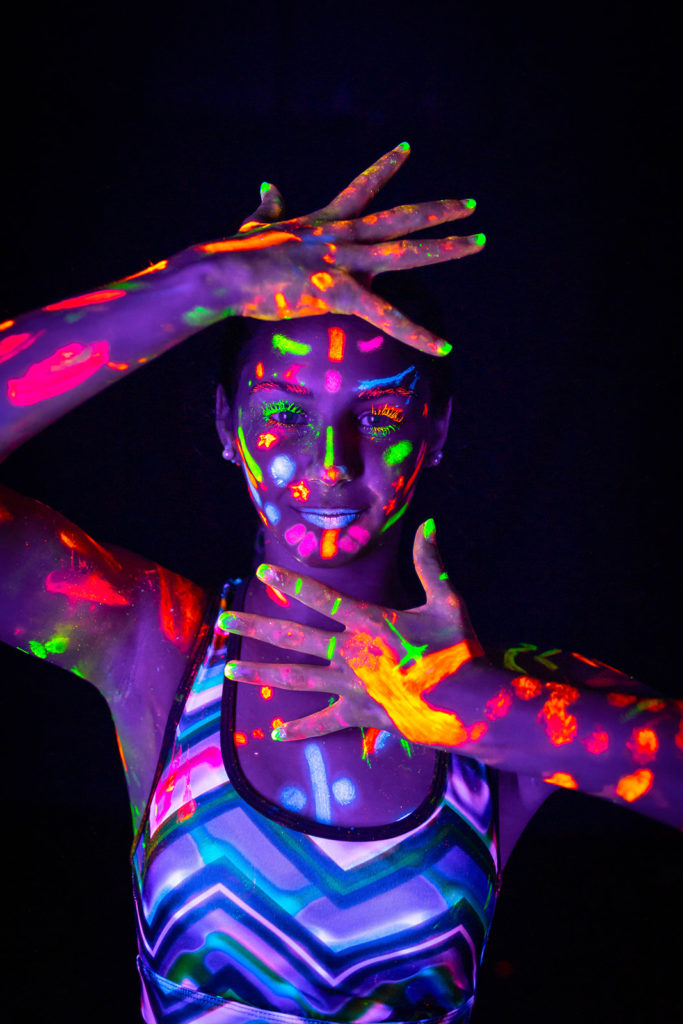
And that’s where the R&D began. After our discussion, I stumbled across a short Instagram video of a neon black-light “glow-in-the-dark” dance performance, which sparked the next step in our exploration.

My thoughts were racing: those glowing patterns could make perfect tracking points! What’s impossible in real-time capture suddenly seemed possible in stop-motion, since every frame is captured individually and the lighting can be changed between exposures. That meant we could shoot each frame twice: first with regular lighting for the “beauty” image, and then again under ultraviolet (UV) light to reveal invisible tracking points. That could be done using DragonFrame’s multi-exposures and automated lighting with DMX features.

The next challenge was finding the right paint, something that would remain invisible under normal lighting but glow under UV. The puppets were made of latex and had already been finished with delicate painted details. Our tests focused on three things: not damaging the original paintwork, ensuring the markings would last and making sure the points stayed invisible in the final image.

I began experimenting with highlighters and liquid glow-in-the-dark paints. But the porous latex surface absorbed most inks too quickly, causing them to fade. Some paints wouldn’t stick at all, smearing onto our fingers whenever we handled the puppet’s head.
After several failed attempts, I discovered the OPTICZ Invisible Ink Pen, a tool often used in security and customs for marking documents. It was exactly what we needed: UV-reactive, water-resistant and designed for porous, textured surfaces. The markings from that pen lasted through the entire production—and remarkably, the puppets still glow in the dark six years later!

This approach made tracking far more precise and reliable than the usual methods, all while preserving the puppets exactly as the directors wanted.

In the end, a simple idea—UV-reactive ink—transformed a major obstacle into a creative breakthrough. This approach not only preserved the puppets’ integrity but also opened new possibilities for stop-motion VFX. Six years later, the glowing dots remain, a quiet reminder that sometimes the best solutions come from thinking outside the frame.

Brought to you by National Film Board of Canada:
This article is part of the befores & afters VFX Insight series. If you’d like to promote your VFX/animation/CG tech or service, you can find out more about the VFX Insight series here.